Social Sprint
Social Collaboration Platform
What it’s all About?
Social Sprint is a collaborative platform that combines project and task management, and allows for outsourcing to freelancers. Users can take on multiple roles and enjoy seamless internal team collaboration.
The platform offers flexibility, streamlines workflow, and improves communication, leading to better outcomes for both freelancers and product managers.
But why?
There are many platforms available that focus on connecting freelancers with companies, but they often provide full projects and lack the option for per-task outsourcing.
This can be problematic for professionals who may not be able to commit to long-term projects, but are capable of completing smaller tasks or groups of tasks, such as releasing a single product feature.
Furthermore, team leaders and product managers may not always have access to external workforces to help with project overflows or feature creep. This can cause delays and impact the overall success of the project.
And So
Social Sprint offers a flexible platform that enables task-based outsourcing and collaboration, allowing freelancers to take on smaller tasks while also providing product managers with access to a pool of external talent to help manage project overflows.
This approach benefits both parties by providing more opportunities for freelancers to work on projects that fit their skills and availability, while also enabling product managers to efficiently manage their projects without being overwhelmed by the workload.
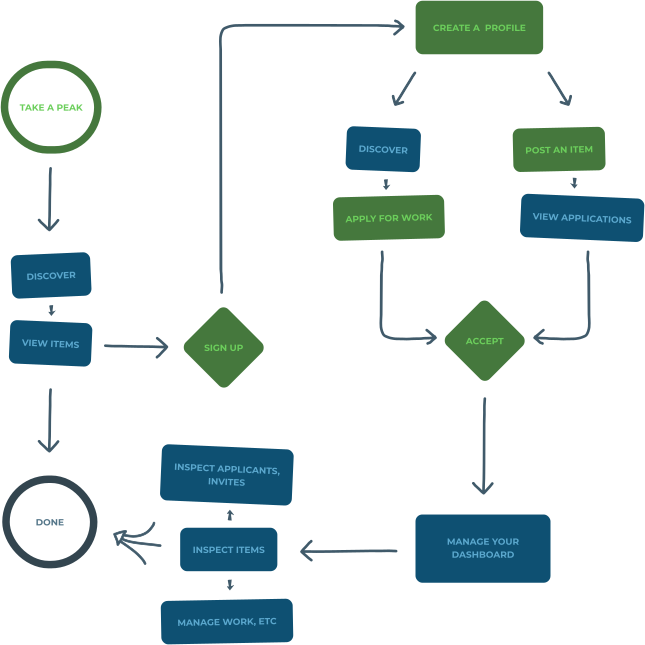
User Flow
Views
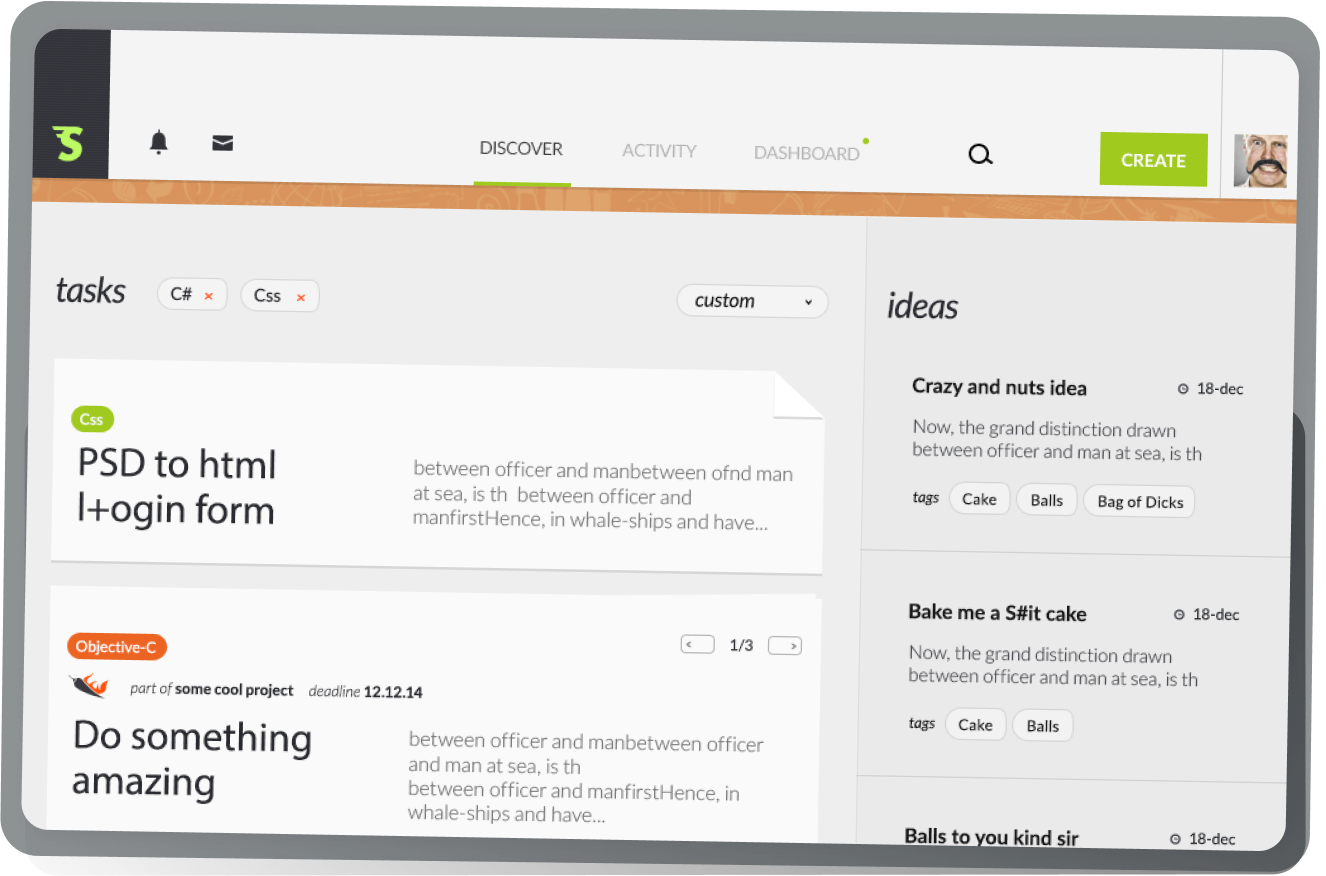
Discovery
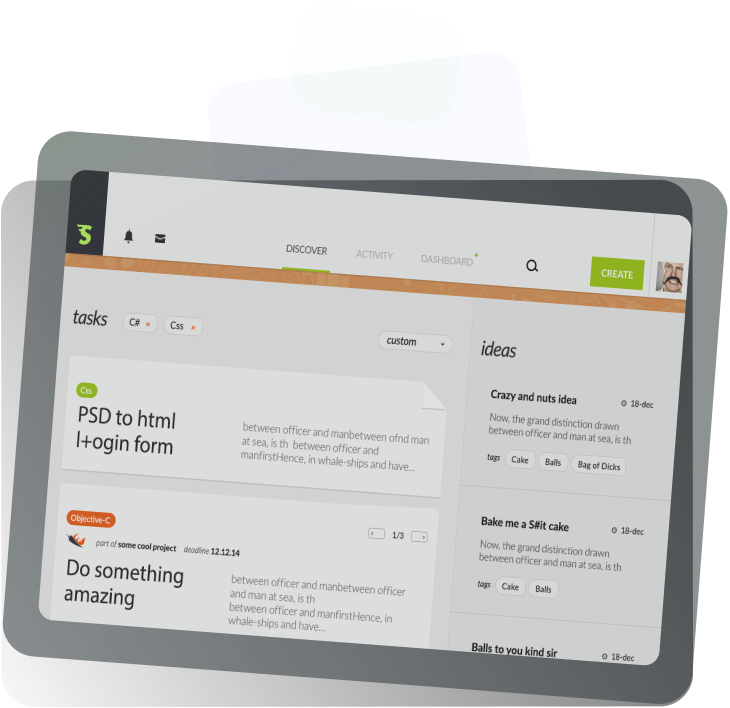
The Discovery Feed displays various posted tasks that match the user's selected skills and categories, as well as ideas and help requests that require further development before becoming projects.
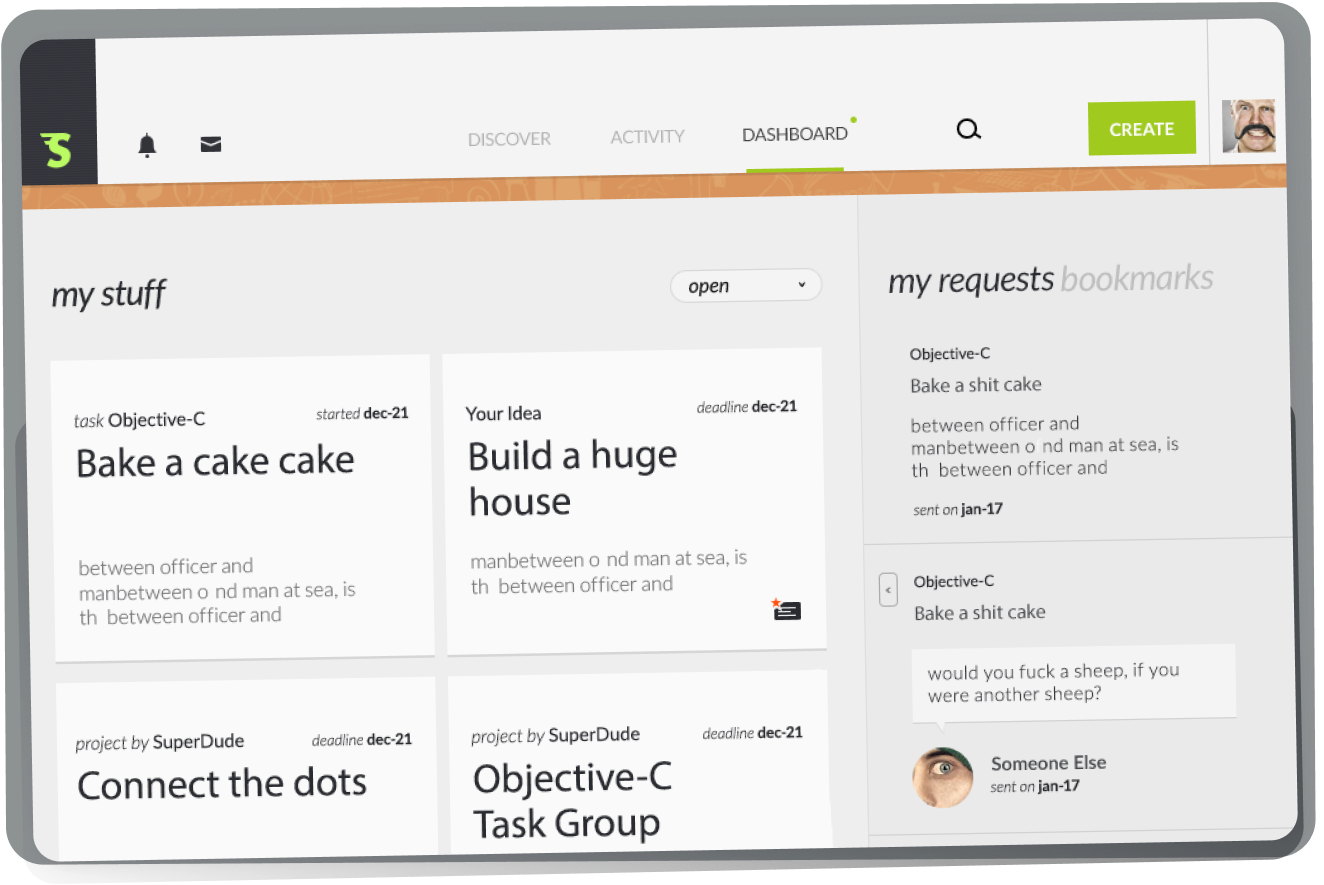
Dashboard
The Dashboard provides a card view of all the tasks posted by the user and the tasks assigned to them, aggregating everything in one place for easy access. Users can have multiple roles on the same item, with both 'owned' and worked-on items presented.
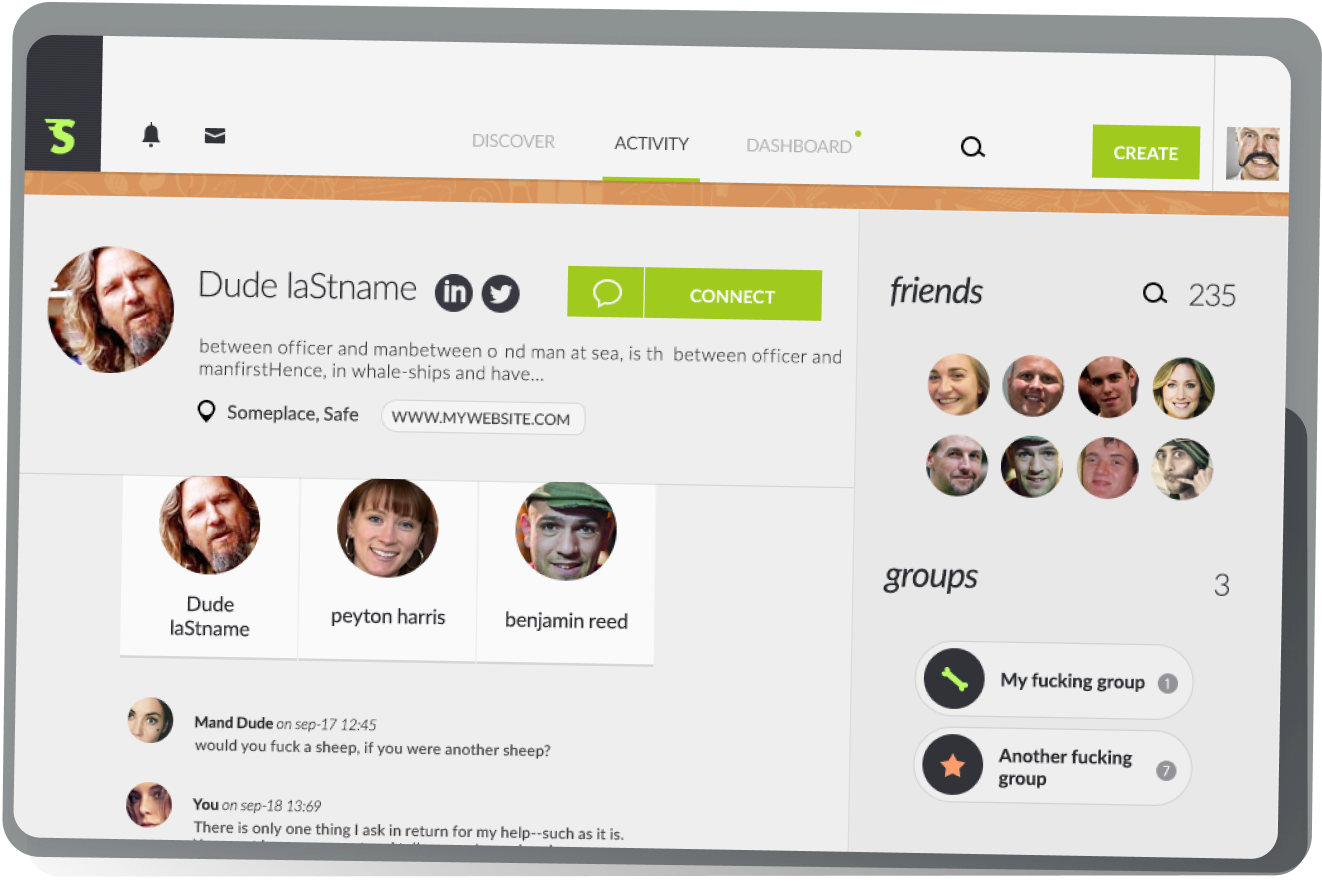
Profile / Activity
The Profile Page features a user header with an activity feed that includes updates on friends' activities, advice requests for projects and tasks from other users, and more.
Quick ‘create’ popup
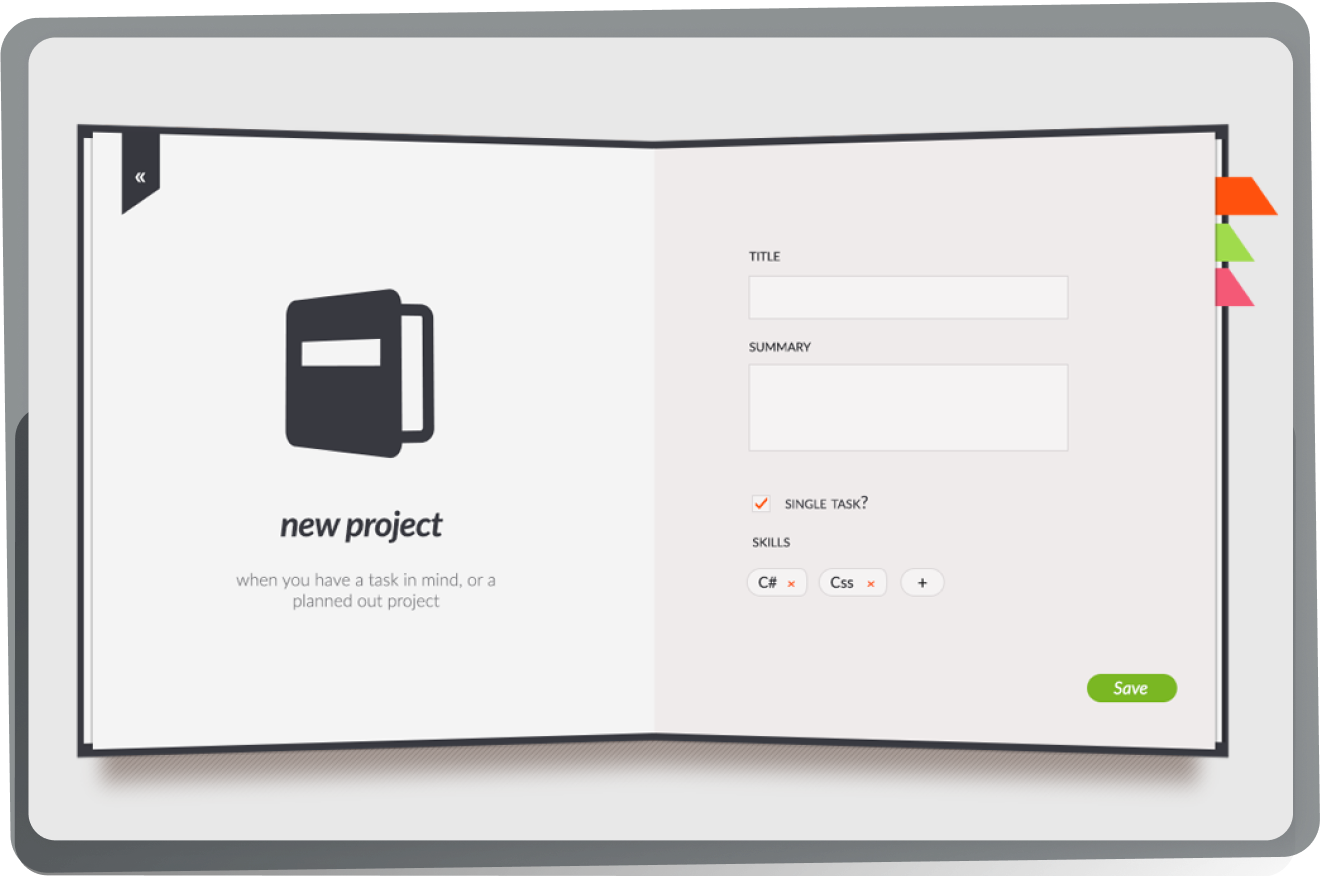
Users have the ability to create new tasks or projects, as well as post new ideas. However, ideas require additional definition before they can be converted into tasks or projects.
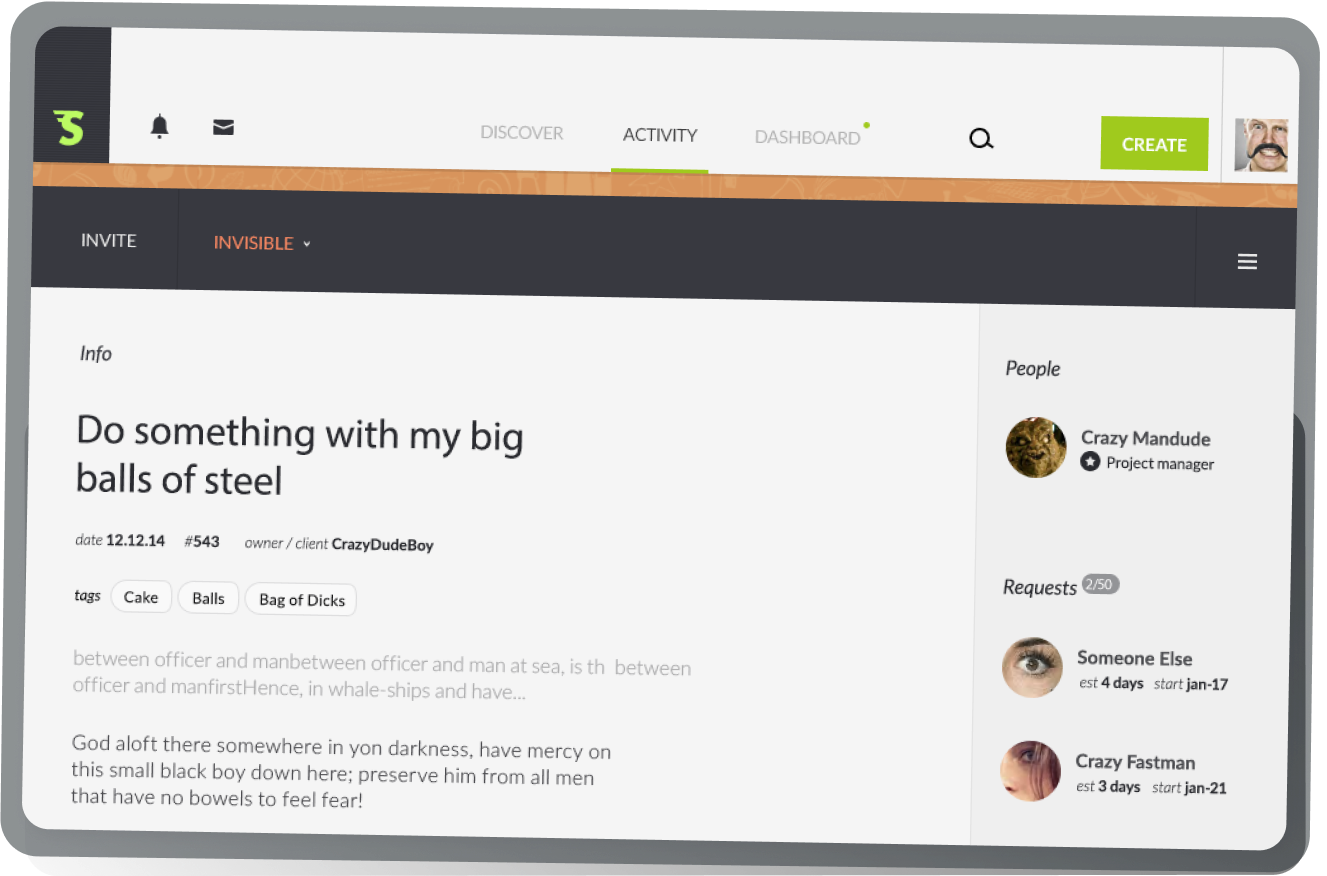
Task
This is the Task View, which represents the smallest possible object that can function as a stand-alone task or be a part of a larger task group or project. The Task or Project Master has the ability to invite people to participate and change various settings, such as visibility, hierarchy, and roles.
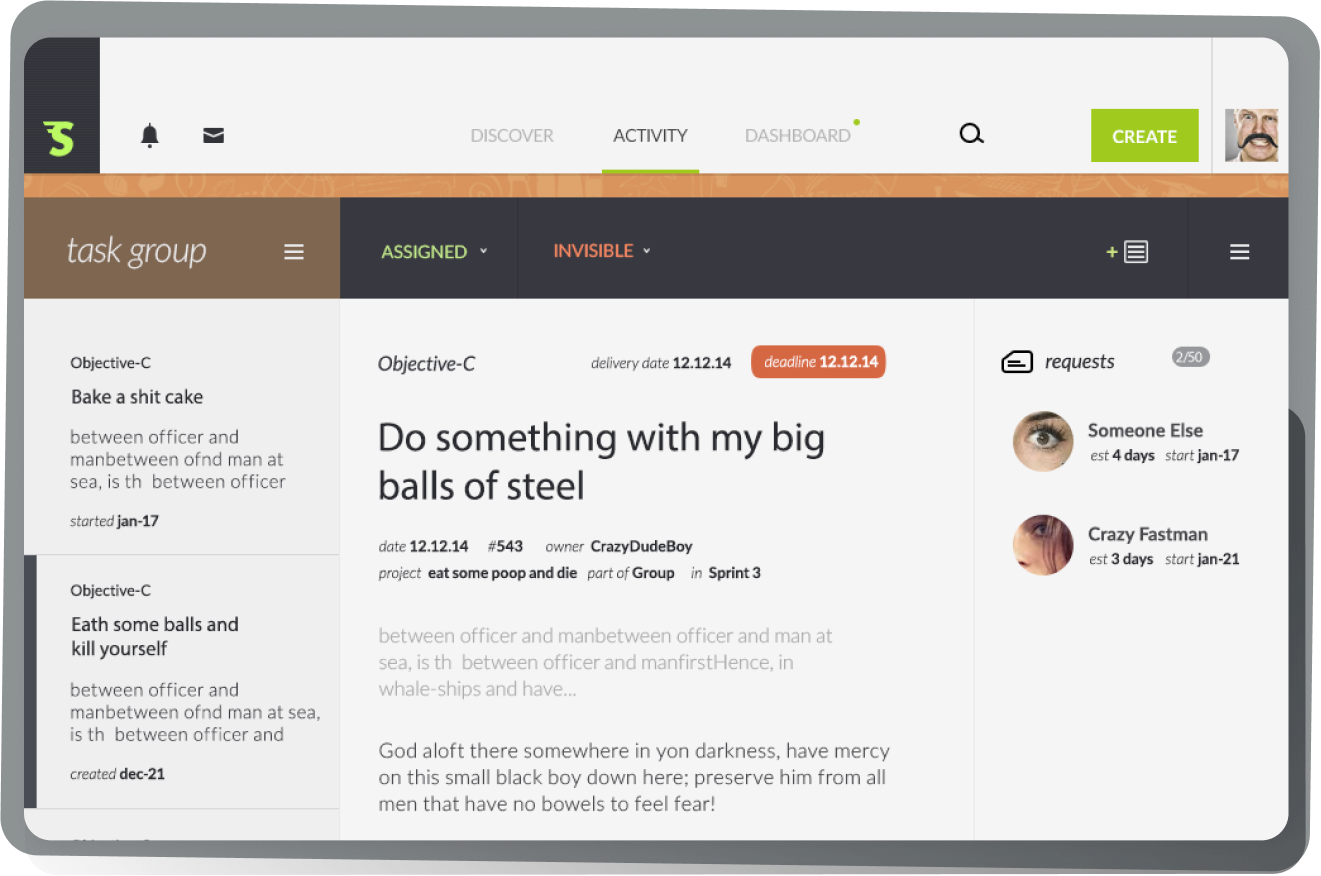
Task Group
Task groups are a way to organize and manage a collection of related tasks. They allow individuals or teams to work collaboratively towards a common goal, with a designated team leader overseeing the progress. Task groups can also have dependencies, meaning that the completion of one task may be necessary before another can begin. By grouping tasks together, it can be easier to track progress and ensure that all necessary work is being completed.
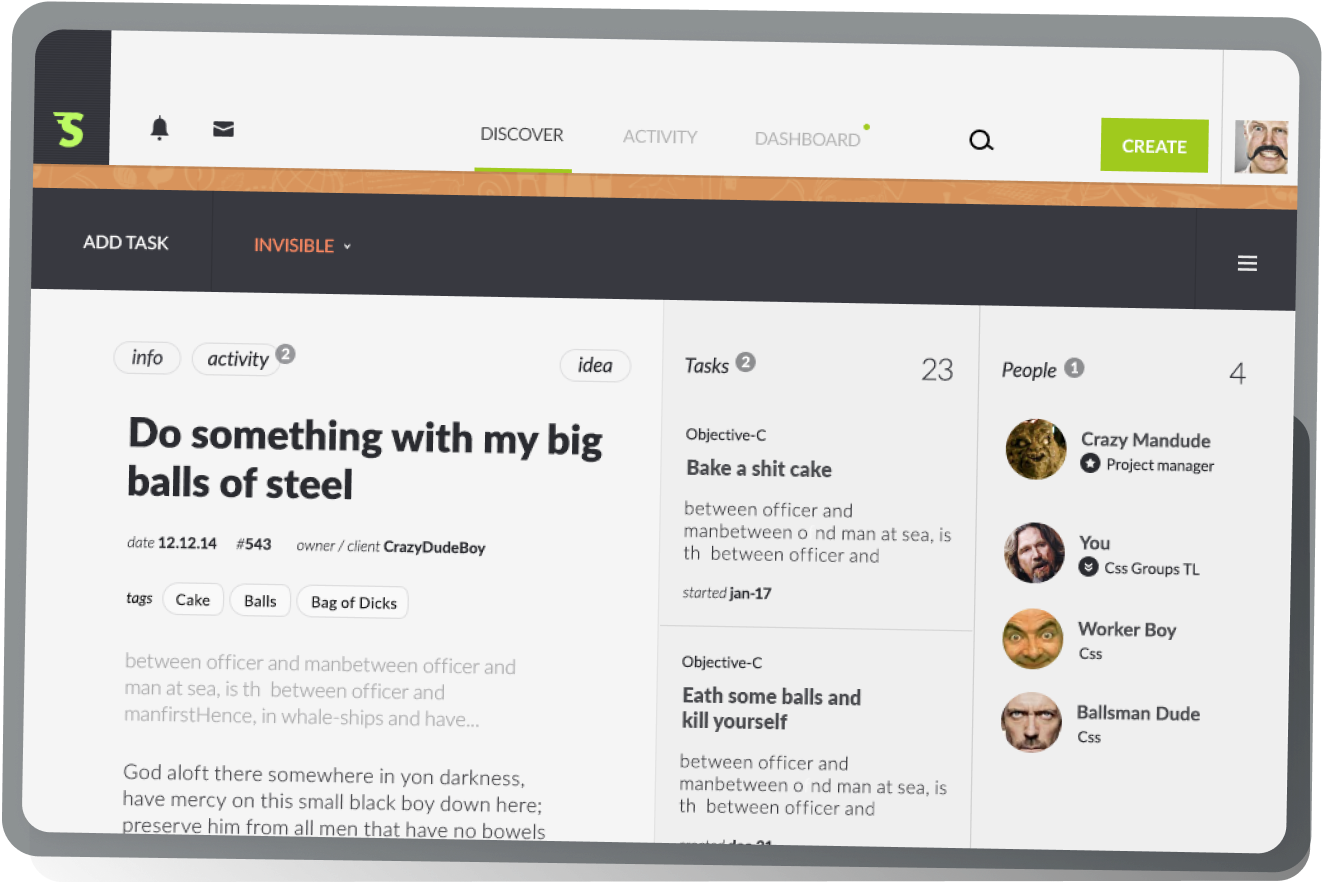
Project
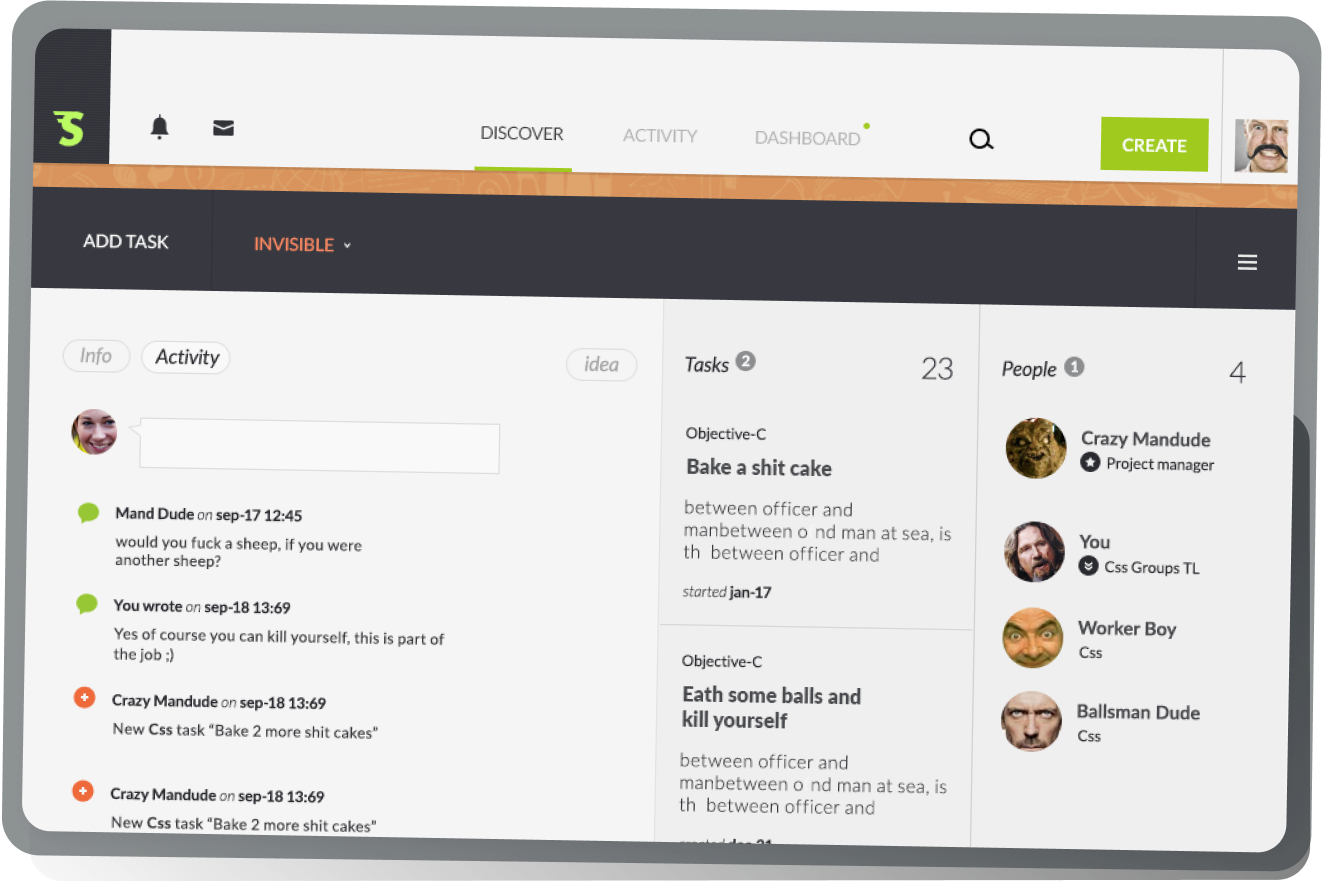
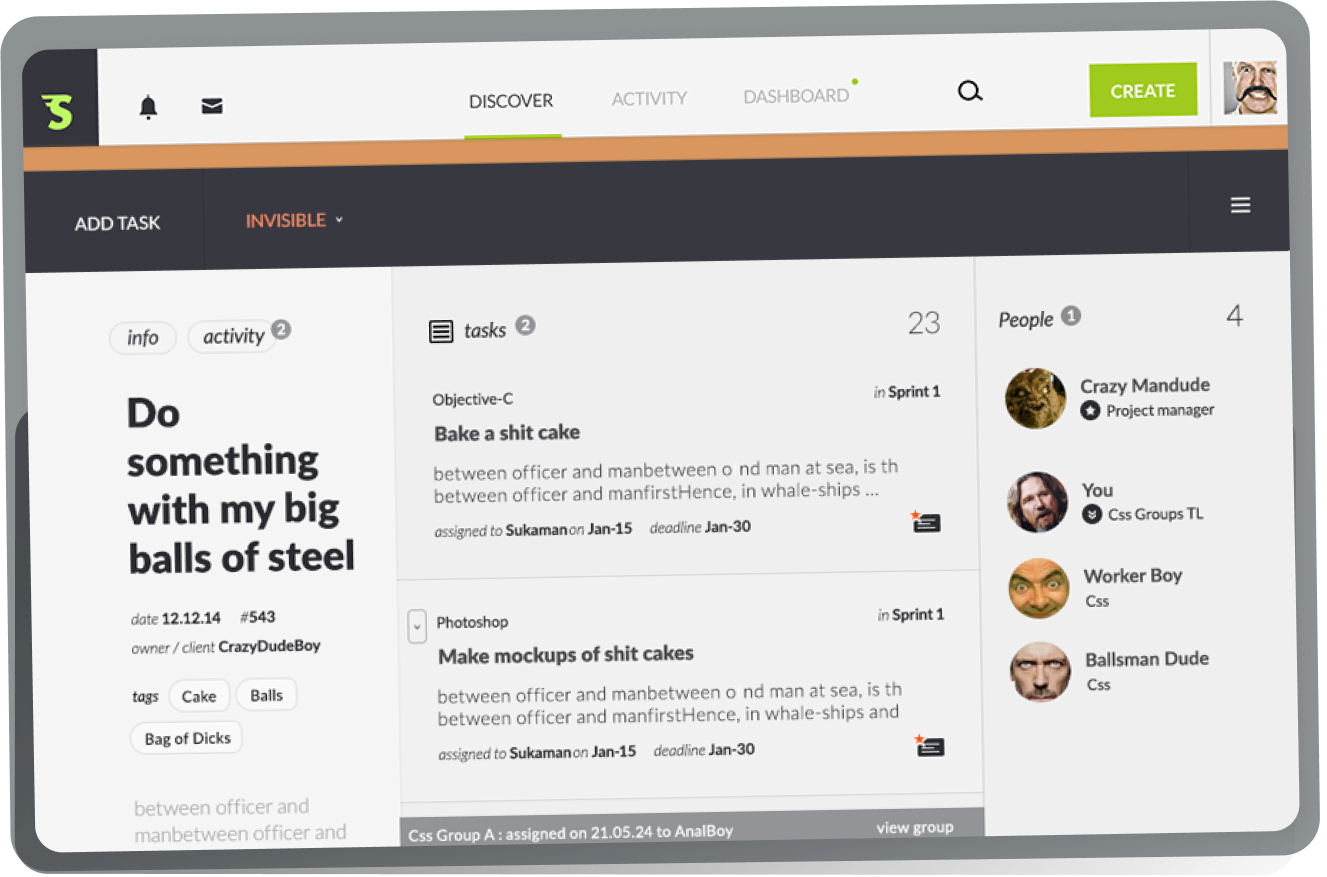
The project view is a central hub where users can access all the tasks and people assigned to them. It provides relevant project information and an activity feed for updates. The view is highly customizable and can be adjusted based on user needs and permissions.
Project : Expanded tasks
Project : Activity